Fall is one of my favorite times to go fishing. The weather cools off, the summer crowds thin out, and the trout start feeding with a little more purpose before winter shows up. You don’t need a giant box of fancy flies to keep up with it either. Most of the time, the fish are locked in on a pretty short menu: big orange caddis, small olive mayflies, midges, and whatever terrestrials are still hopping around on a warm afternoon.
I’ve spent plenty of days switching flies every ten minutes when I probably just needed to watch the water and tie on something close. Here’s what I look for in the fall, and what I actually put on.
October Caddis
If you fish out West, this is the hatch people get excited about. October Caddis are big. We’re talking a size 8 or 10, with an orange or tan body and those tent-shaped caddis wings. They start showing up in mid to late September and can hang around through October, sometimes into November. The best action is usually later in the day, into the evening, when those big bugs start coming off and skating across the water.
You don’t have to get too cute with the fly. An orange or yellow [Stimulator](https://www.maxsflyfishing.com/stimulator.html) in a size 8 or 10 is my first choice. It’s a great fly that can bring one of those bigger fish to the surface, and it works well with a nymph dropped off the back. A larger [Elk Hair Caddis](https://www.maxsflyfishing.com/elk-hair-caddis.html) in orange or tan works well too. If they’re not coming up for the dry, keep that Stimulator on as an indicator and drop a pupa or a simple nymph a couple feet under it.
[Max: add a quick story about a fall evening when the October Caddis were coming off, if you’ve got one.]
Blue-Winged Olives
BWOs are the hatch I trust the most in the fall, because they show up just about everywhere trout live. They’re small mayflies, usually a size 18 to 20, with an olive body and gray or bluish-gray wings. They like cooler weather, and they really get going on those cloudy, drizzly afternoons when you almost talked yourself into staying home. You’ll see them from September into November, mostly from mid-morning through the afternoon. If fish are sipping gentle little rises in a riffle or a soft seam, there’s a decent chance they’re on BWOs.
A small Parachute Adams or a simple olive dun will get it done on top. Underneath, a [WD-40](https://www.maxsflyfishing.com/wd-40.html) is a great little nymph, and a small [Gold Ribbed Hare’s Ear](https://www.maxsflyfishing.com/gold-ribbed-harersquos-ear.html) is always worth a look. If you don’t have a perfect BWO in the box, tie on the closest small olive fly you’ve got. Close is usually close enough.
Midges
Midges don’t get the same hype as a big caddis hatch, but once the water really cools off, they become one of the most important things in the river. They’re tiny. Most of the time you’re looking at a size 18 to 22, in black, olive, or red. They hatch year-round, but in late fall and winter they’re often the main course.
Don’t let the size fool you. I have caught large fish on a [Zebra Midge](https://www.maxsflyfishing.com/zebra-midge.html), and when I nymph, time and time again that fly is one of the most effective in my box. A [Brassie](https://www.maxsflyfishing.com/brassie-nymph.html) is another simple one that just works. On top, if you see those little dimple rises and nothing bigger is coming off, a [Griffith’s Gnat](https://www.maxsflyfishing.com/griffiths-gnat.html) is a great fly to have. It was the first dry fly I ever learned how to tie.
A Stimulator with a small midge hanging off the back is a setup I go to a lot. On the Truckee I’ve done well with a hopper and about a three-foot dropper. Any kind of midge should work just fine. Same idea up on Hamilton Branch, where I’ve started with a size 10 Stimulator and then dropped an olive or black midge about two feet under it.
Late Terrestrials
Just because the calendar says fall doesn’t mean the hoppers and ants disappear overnight. On a warm afternoon, especially earlier in the fall before the first hard frosts, trout will still eat a terrestrial like it’s summer. Hoppers taper off as the nights get cold, but ants and beetles can stick around longer, and a windy day can blow a lot of them into the water.
A [Stimulator](https://www.maxsflyfishing.com/stimulator.html) does a nice job as a hopper or attractor, and it’s perfect for that hopper-dropper setup. For ants, I like a [Bionic Ant](https://www.maxsflyfishing.com/bionic-ant.html). It’s a great terrestrial fly. If the water looks dead and nothing is hatching, don’t be afraid to plop one along the bank. Sometimes that’s all it takes.
Mahogany Duns
These don’t get talked about as much as BWOs, but they’re a real fall mayfly on a lot of trout streams. Mahogany duns are a little bigger than your average BWO, usually a size 14 to 18, with a reddish-brown body. They tend to come off in the afternoon, often in slower, softer water. If you see fish rising and the bugs look brown rather than olive, that’s your clue.
A simple reddish-brown parachute or comparadun will cover you on top. Underneath, a [Gold Ribbed Hare’s Ear](https://www.maxsflyfishing.com/gold-ribbed-harersquos-ear.html) is a solid nymph for this.
How to Match Without Overthinking It
Here’s the part I have to remind myself of, because I am fully capable of emptying half my box into a river that already told me what it wanted.
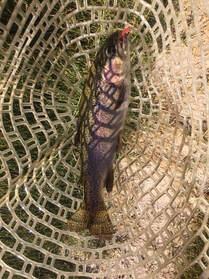
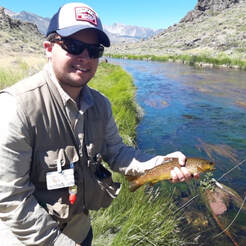
Watch the water first. Look at the size and color of what’s coming off, or what the fish are actually eating, and start there. You do not need a perfect imitation every time. One trip on the Provo, the fish were clearly going after PMDs and I didn’t have one. I tied on a BWO because it looked the most like it in my box. I waited for a rise, put the fly a little ahead of the ripple, and the fish turned around and slurped it up. FISH ON. It was a decent size brown, and that fish felt really good to land.
Presentation matters as much as the fly. If you’re getting looks but no takes, change the angle or the drift before you change the fly again. If nothing is happening on top, it’s okay to go underneath, or even put on a [Woolly Bugger](https://www.maxsflyfishing.com/woolly-bugger.html). It’s like the Swiss Army knife of flies, and it will catch fish all year.
Brown trout start to spawn in the fall, so if you see those clean gravel beds, give them a wide berth.
Start simple. A Stimulator or Elk Hair Caddis, a small olive mayfly or WD-40, and a midge will cover most fall days. Pay attention, make a good cast, and don’t let yourself get too fancy.
Good luck and happy fishing!